

After years of fitting people with glasses and watching how they wear over time, I’ve noticed that the question of replacement rarely has a straightforward answer. Most people assume there’s a standard interval – every year, every two years – but the reality is messier and more individual than that. What matters is understanding the difference between a lens that’s still doing its job and one that’s actively working against you.
The most common driver of replacement is a genuine shift in your prescription. This happens gradually for most people, especially those under 40 or over 60 when vision tends to change more noticeably. You might notice text getting slightly blurry at a distance you used to see clearly, or reading becoming more of a strain. That’s not a sign your glasses are “worn out” – it’s a sign your eyes have shifted. A routine eye exam catches this before you’ve spent months squinting without realizing it. For people in their middle years with stable vision, prescription changes are often minimal, and glasses can function well for three to five years or longer.
Frame degradation is a separate issue entirely. Plastic frames develop stress fractures, hinges weaken, and nose pads compress or crack. Metal frames can bend out of alignment. I’ve seen people wear frames for a decade without real problems, and others whose frames become uncomfortable or misaligned within two years. This depends heavily on how the glasses are handled – whether they’re set down carelessly, sat on, or stored properly. If your frames are physically compromised, the lenses themselves might be fine, but wearing them becomes uncomfortable or the optical alignment shifts enough to cause eye strain.
When Lens Degradation Actually Matters
Lens coatings degrade over time. Anti-reflective coatings can flake or wear unevenly, creating visual artifacts. Scratch-resistant coatings eventually fail, and the lenses become more prone to visible scratching. Progressive lenses – the no-line bifocals – can develop internal stress or slight separation between layers, though this is less common than people fear. A few light scratches in your peripheral vision usually don’t warrant replacement. Deep scratches in your line of sight, or a coating that’s visibly peeling, do.
Lens material itself doesn’t degrade in the way frames do. Polycarbonate and high-index plastics don’t become “weaker” over time. They don’t yellow significantly unless exposed to intense UV or heat. Standard plastic can yellow slightly, but this is usually cosmetic rather than functional. The real decline comes from physical damage and coating failure, not the material aging.
Lifestyle and Usage Patterns
How hard your glasses work affects their lifespan. Someone who wears the same pair eight hours a day, five days a week is putting different stress on them than someone who rotates between two pairs. People who spend significant time outdoors, especially in dusty or humid environments, see more coating wear and frame oxidation. Athletes or people in physically demanding work often need replacement sooner because frames take more impact and lenses accumulate more minor damage.
Prescription strength matters too. High prescriptions mean thicker lenses or more complex lens geometry, which can make them slightly more vulnerable to stress fractures at the edges. Very strong prescriptions in plastic lenses are also heavier, which puts more strain on hinges and nose pads.
I’ve noticed that people who treat their glasses casually – leaving them loose in bags, cleaning them with whatever cloth is nearby, storing them in hot cars – replace them more frequently. Not because the glasses fail faster in any absolute sense, but because small problems accumulate and become noticeable sooner. Someone who uses a proper case, cleans with microfiber, and handles them deliberately can stretch the useful life considerably.
The Practical Replacement Window
For most people with stable prescriptions and reasonable care, glasses remain functionally adequate for two to four years. This isn’t a hard rule. I’ve seen people get five or six years from a pair, and others who need replacement after eighteen months because the prescription shifted significantly or the frames failed. The key is paying attention to what’s actually happening rather than following a calendar.
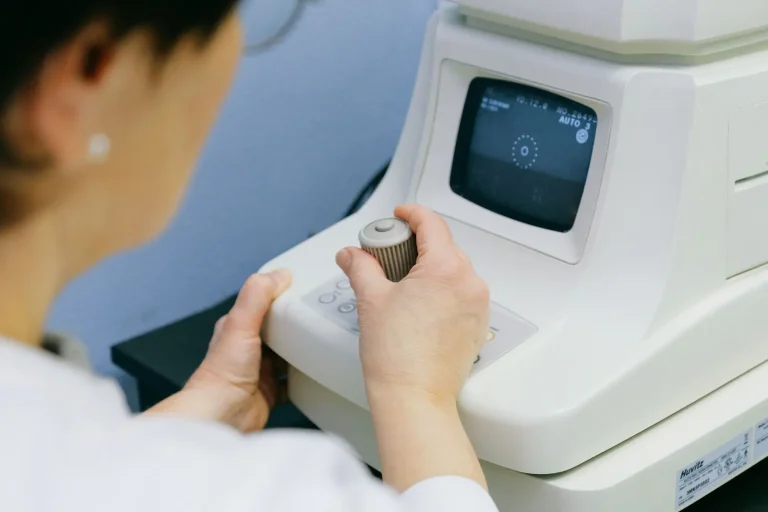
What I watch for in my own practice: Does the person report eye strain that wasn’t present before? Are they squinting more? Has their job or daily routine changed in a way that demands better vision? Is the frame visibly damaged or uncomfortable? Those are the real signals. An eye exam every one to two years gives you concrete data about whether your prescription has shifted enough to matter. Between exams, you’re the best judge of whether your current glasses are still meeting your needs.
One pattern I’ve observed repeatedly is that people often delay replacement longer than they should, adapting to slightly blurry vision without realizing it. Then they get new glasses and are surprised at how much clearer things are. The opposite happens too – someone replaces glasses that still work fine because they assume they should. Neither approach is ideal. The middle ground is staying aware of how your vision actually feels and getting checked when something changes noticeably.