

Most people schedule an eye exam when they notice their vision has shifted – when text at arm’s length gets fuzzy or driving at night feels less sharp. By that point, months or sometimes years have already passed since the last appointment. This reactive approach is understandable. Vision feels stable most days. You adapt to gradual changes without realizing it’s happening. But this is precisely where regular exams become valuable in ways that aren’t obvious until something goes wrong.
Over many years of working with people across different ages and habits, I’ve observed a consistent pattern: the eye is remarkably good at compensating for slow changes. Your brain fills in gaps, adjusts to slight distortions, and makes sense of what’s arriving through the lens. You don’t notice these adjustments happening. What you notice is that one day, reading feels harder, or you’re squinting more at meetings. By then, the underlying shift has been underway for a while.
An eye exam isn’t just about measuring whether you need stronger glasses. It’s a snapshot of the current state of structures inside your eye that don’t announce problems until they’ve progressed. The retina, optic nerve, eye pressure, and the lens itself all change over time. Some of these changes are normal aging. Others signal conditions that benefit enormously from early detection.
What Changes Happen Without You Knowing
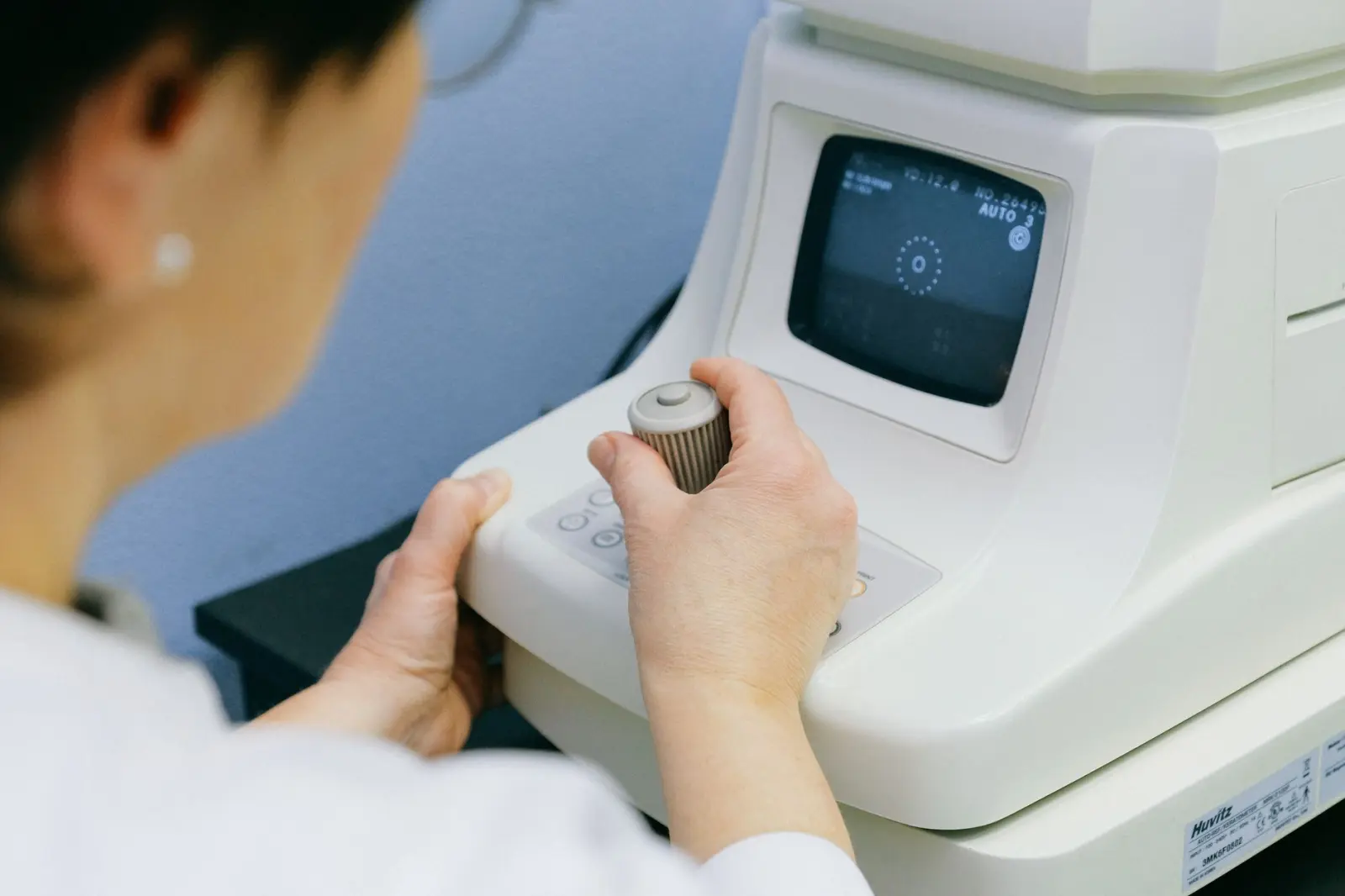
The eye is a closed system. You can’t see inside your own eye to observe what’s shifting. A professional can. During a standard exam, they’re looking at the health of blood vessels in the retina, checking for thinning or thickening of the optic nerve, measuring fluid pressure inside the eye, and assessing how the lens is aging. None of these things produce symptoms until they’ve progressed significantly.
Consider eye pressure as an example. Elevated pressure inside the eye can damage the optic nerve gradually, often without any discomfort or noticeable vision change until substantial damage has occurred. This is why glaucoma is sometimes called the “silent thief of sight.” Someone can feel completely fine while their optic nerve is being compromised. A regular exam catches elevated pressure before it causes irreversible damage. The same applies to early signs of diabetic retinopathy, age-related macular degeneration, or retinal thinning. These conditions progress quietly.
The lens also changes in ways you won’t feel coming. Cataracts develop over years, starting as a slight cloudiness that barely affects vision, then gradually reducing contrast and clarity. Early detection matters because it gives you time to plan, to adjust lighting at home or work, and to schedule surgery when it’s truly necessary rather than when you’re suddenly struggling.
The Difference Between Noticing and Knowing
There’s a meaningful gap between noticing that your vision has changed and knowing what’s actually happening in your eye. You might notice that you’re holding your phone further away. That’s useful information, but it doesn’t tell you whether you need a new prescription, whether your eye pressure is rising, or whether something else is developing. A professional exam answers those questions with precision.
I’ve worked with people who waited years between exams, assuming their vision was stable because they’d adapted to it. When they finally came in for a checkup, we’d find that their prescription had shifted considerably, or that early signs of age-related changes were present. In some cases, we caught conditions that would have progressed much further if another year or two had passed. The person felt fine the entire time. That’s the deceptive part of eye health – stability is often an illusion created by your brain’s remarkable ability to compensate.
Regular exams also provide a baseline. The first exam establishes what’s normal for your particular eyes. Subsequent exams compare against that baseline, making it easier to spot what’s actually changing versus what’s always been there. This is especially important for conditions that develop slowly. A small change year to year might seem insignificant. But over five or ten years, that accumulation matters.
Systemic Health Shows Up in the Eyes
The eyes are also a window into broader health patterns. Blood vessels in the retina reflect what’s happening with blood pressure, cholesterol, and blood sugar control. Someone with undiagnosed diabetes or hypertension might first learn about it during an eye exam, when a professional notices changes in the retinal blood vessels that suggest systemic issues. This isn’t rare. It happens regularly.
For people managing chronic conditions like diabetes, regular eye exams are part of the picture of whether their management is working. Changes in the retina can signal whether blood sugar has been well-controlled or whether adjustments are needed. This feedback loop is valuable information that doesn’t come from how you feel day to day.
The Timeline of Preventive Benefit
The benefit of regular exams compounds over time. Someone who gets checked every two years from age 30 onward builds a detailed record of how their eyes are aging. By the time they’re 60, they and their eye care provider have twenty or thirty data points showing the trajectory of change. This history makes it far easier to spot when something is deviating from that normal pattern for them.
Compare this to someone who only comes in when vision feels noticeably different. They have no baseline. They don’t know what their normal rate of change is. When something does develop, there’s no early warning. The condition is already further along.
The frequency of exams matters too. For younger people with no risk factors, exams every two to three years is often reasonable. For people over 60, or those with existing conditions like diabetes or high blood pressure, annual exams make more sense. For people with a family history of glaucoma or macular degeneration, more frequent monitoring is worthwhile. The pattern isn’t one-size-fits-all, but the principle is consistent: regular checkpoints catch changes earlier.
What I’ve noticed over time is that people who maintain regular exam schedules tend to catch problems when they’re most manageable. They’re also more likely to notice when something feels off between exams, because they have a clearer sense of what normal vision feels like for them. There’s a kind of awareness that builds from consistent monitoring. You become attuned to your own baseline, which makes deviations more apparent.
The investment in regular exams is quiet and preventive. You might go in, get your prescription updated, and feel like nothing much happened. But over years, that consistency protects something you rely on every moment you’re awake. Vision isn’t something you can easily restore once it’s significantly compromised. Catching changes early, before they progress to the point where they affect your daily life, is where the real value lives.