
Most parents bring their children in for routine checkups without much thought about vision. They assume that if a child can see the board at school or read a picture book, everything is fine. That assumption costs families far more than they realize. Over the years, I’ve watched countless children struggle with learning, coordination, and confidence – not because of any cognitive issue, but because their eyes weren’t working the way they should have been.
The tricky part is that children don’t always know something is wrong. A five-year-old who has only ever seen the world slightly blurry doesn’t have a reference point for clarity. They adapt. They sit closer to the screen. They tilt their head. They squint without realizing it. Parents miss these small adjustments because they happen gradually, and the child never complains about something they’ve always known.
What I’ve noticed most is how vision problems show up as behavior problems first. A child who can’t see the board clearly might seem distracted or unmotivated in class. A child with an eye alignment issue might avoid reading or complain of headaches after school. Teachers sometimes flag these kids as having attention difficulties when the real issue is that their visual system is working overtime just to process what they’re looking at.
The Window for Detection
Vision develops rapidly in the first few years of life. By age three, most of the visual system is already formed. By age six or seven, it’s largely set. This means that problems caught early – before habits and compensations become ingrained – respond much better to intervention. A child whose eyes aren’t focusing properly at age three has a much better chance of developing normal vision if it’s addressed then, rather than at age seven when the visual pathways have already adapted to working incorrectly.
I’ve seen the difference this makes. Children who had early detection and correction developed reading skills more smoothly. Their handwriting improved. They participated more in classroom activities. The change wasn’t dramatic in every case, but it was consistent. The ones who went undetected longer often had to work much harder to catch up, even after correction.
What Early Exams Actually Reveal
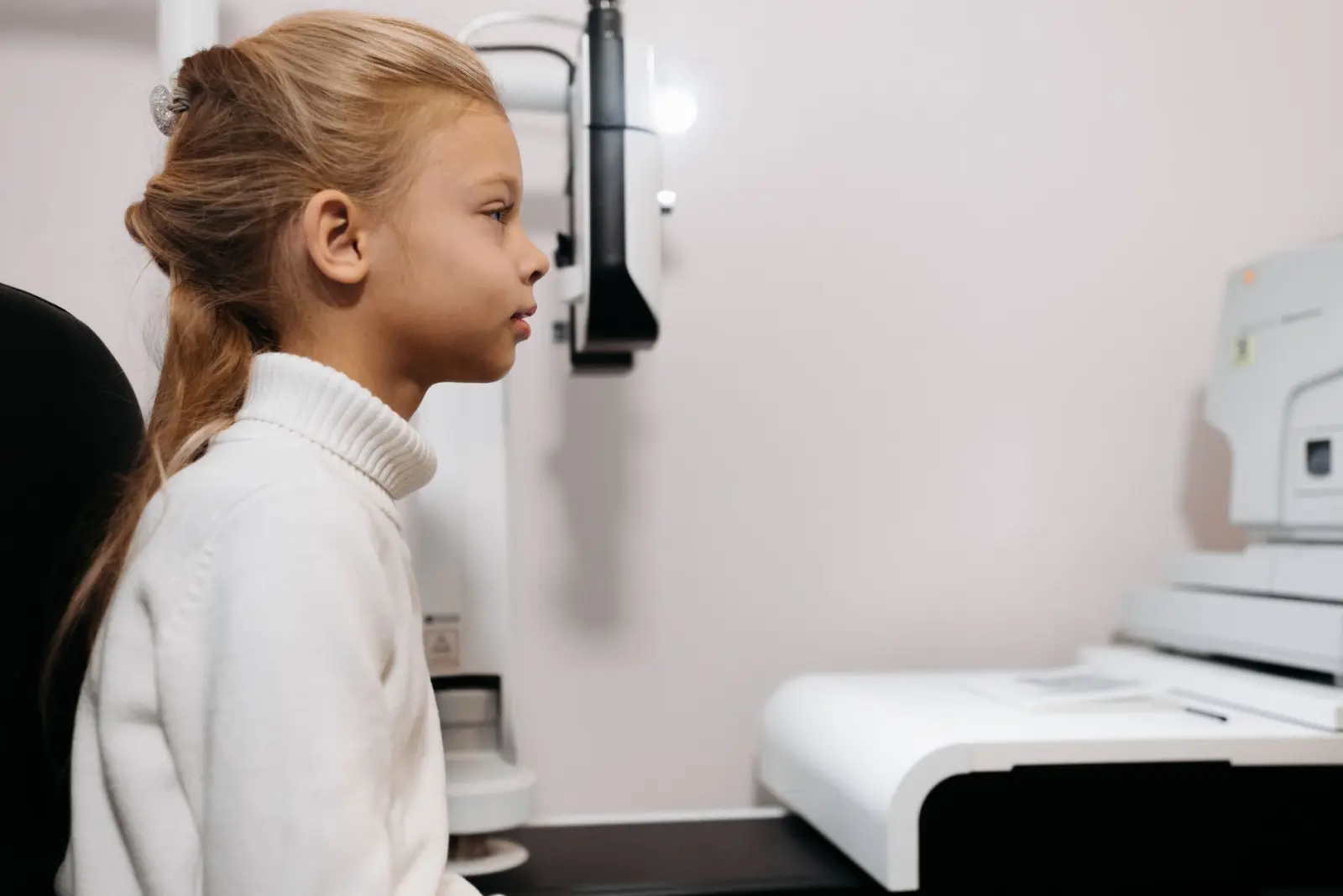
A proper eye exam for a young child goes beyond asking them to read letters on a chart. It involves looking at how the eyes focus, how they move together, whether there’s any refractive error (nearsightedness, farsightedness, or astigmatism), and whether both eyes are working as a team. It also checks for less obvious issues like amblyopia, where one eye isn’t developing normal vision because the brain is favoring the other eye.
Many of these problems have no obvious symptoms. A child with moderate farsightedness might function fine in some situations but struggle with sustained near work like reading or drawing. A child with a small eye alignment issue might have no complaints but be using extra mental effort to keep their eyes coordinated. These aren’t dramatic problems, but they’re real, and they accumulate over time.
What surprised me early on was how often parents were shocked to learn their child needed glasses. Not because the child was complaining, but because the parents had genuinely believed everything was normal. The child had never said anything was wrong. School performance was okay. There were no obvious signs. Yet the exam showed a significant refractive error that was making daily visual tasks harder than they needed to be.
The Cost of Waiting
Delaying eye exams doesn’t just mean a child goes without correction longer. It can mean missed opportunities for visual development itself. Some vision problems, if left unaddressed during critical developmental windows, become much harder to correct later. The brain’s visual pathways are most flexible when a child is young. After a certain age, that plasticity decreases.
I’ve also noticed that children who finally get glasses or other correction after years of struggling often have confidence issues that take time to resolve. They’ve internalized the idea that they’re not good at reading, or that they’re clumsy, or that they can’t focus. Correcting the vision helps, but the psychological patterns sometimes lag behind.
There’s also a practical side. A child who can’t see clearly is more likely to have accidents. They’re more likely to avoid physical activities because they feel less confident navigating space. They might miss social cues or facial expressions from across a room. These aren’t life-threatening issues, but they affect how a child moves through the world and how they see themselves.
When to Start and How Often
The American Academy of Pediatrics recommends vision screening starting in infancy, with formal eye exams by an optometrist or ophthalmologist by age three at the latest. After that, regular exams every one to two years during school age makes sense, more frequently if there’s any indication of a problem or if there’s a family history of vision issues.
What I’ve found is that the frequency matters less than the consistency. A child who gets checked every other year and has corrections made promptly does far better than a child who gets checked once and then goes years without follow-up. Vision can change, especially during growth spurts. What was correct at age five might not be correct at age seven.
Parents sometimes ask whether they should wait until a child is old enough to read the eye chart. That’s not necessary. Modern eye exams for young children use techniques that don’t require verbal responses. An examiner can assess focus and eye alignment through observation and specialized equipment. A two-year-old can’t tell you if they see better with lens A or lens B, but an experienced examiner can figure it out.
The Overlooked Pattern
One thing that stands out to me is how often vision problems get attributed to other causes. A child who struggles with reading gets referred for learning disability testing when they actually just need glasses. A child who seems clumsy or has poor handwriting gets evaluated for motor coordination issues when the real problem is that they can’t see clearly enough to judge distance or position. These evaluations aren’t wrong, but they miss the forest for the trees.
This is why early, routine eye exams matter so much. They’re not just about correcting vision. They’re about establishing a baseline, catching problems before they compound, and ruling out vision as a factor in other developmental concerns. A child who’s been thoroughly evaluated by an eye care professional and found to have normal vision is one less variable to worry about when addressing other issues.
The reality I’ve observed is that most vision problems in children are manageable. Glasses work. Contact lenses work. Eye patches help with amblyopia. Eye exercises can improve coordination. But all of these interventions work best when they start early, when the visual system is still developing and adaptable. Waiting doesn’t make the problem go away. It just makes it harder to fix.